
最近の業界情報に基づく内容
Metal additive manufacturing and 3D printed foundry applications · EOS and voxeljet
Metal Additive Manufacturing Support
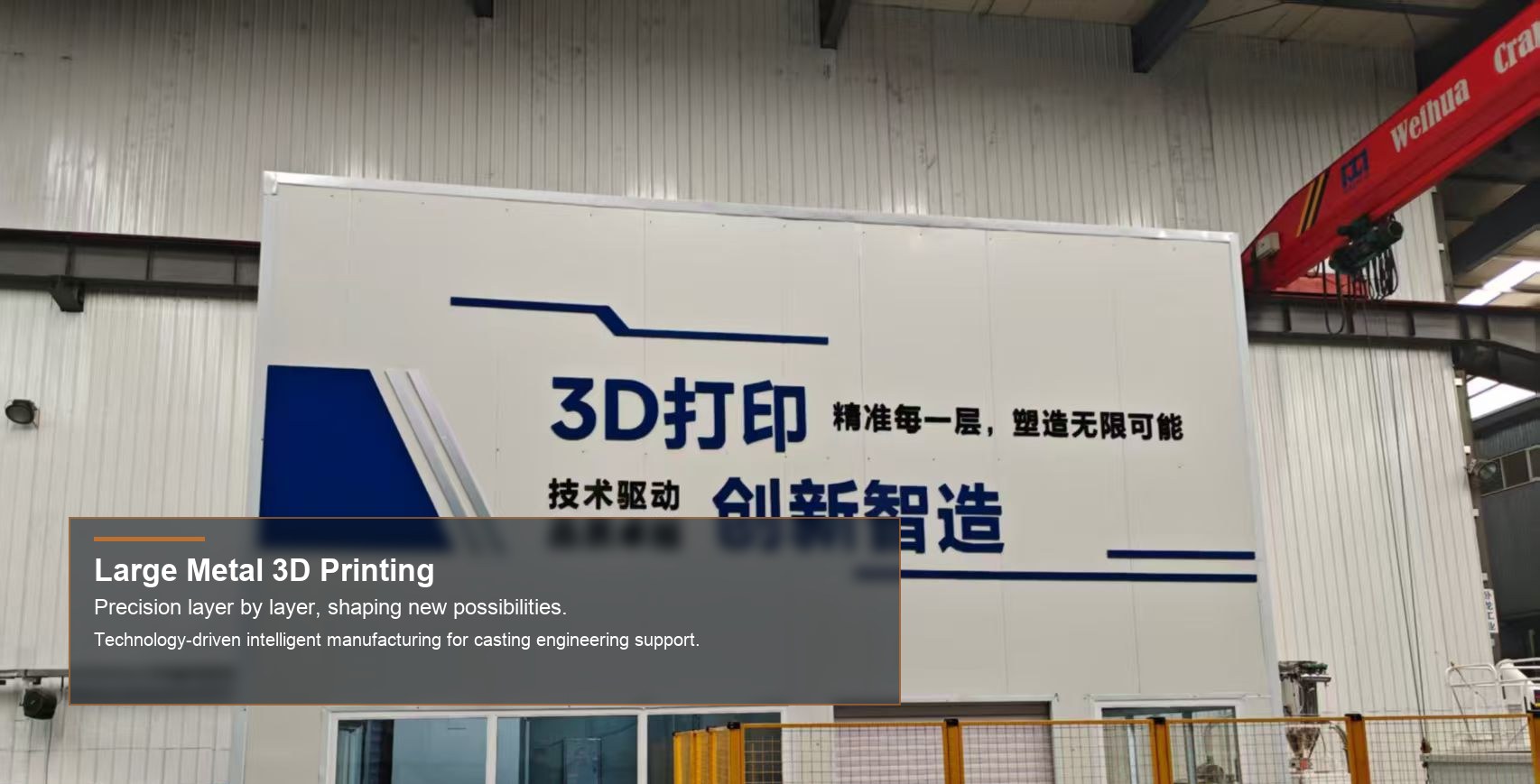
For Hongsen, large metal 3D printing is presented as an engineering support capability around casting, machining, inspection, and export coordination. It helps buyers discuss complex geometry, prototype validation, and process risk before a drawing-based casting project is fixed.
プロジェクト画像
Industrial metal 3D printing is valued for design freedom and complex geometry, while foundry-focused 3D printing is often used to support molds, cores, prototypes, and small-batch validation. For an OEM casting RFQ, the useful question is not whether 3D printing replaces casting, but where it can make early engineering review faster and clearer.
最近の業界情報に基づく内容
Metal additive manufacturing and 3D printed foundry applications · EOS and voxeljet
Complex internal geometry can be discussed earlier when a 3D model is available
Prototype or pilot-batch needs can be reviewed before stable casting production is finalized
Additive review can help identify machining, distortion, inspection, and route-fit questions
The strongest value is in connecting additive manufacturing with casting route selection and CNC follow-up
検討項目
The best RFQ use is practical and limited: send the drawing, 3D model, sample photos, application notes, and quantity plan so the supplier can judge whether additive support is useful before quotation.
Use it for complex housings, internal passages, lightweight structures, or difficult-to-machine areas
Use it when a prototype, sample validation, or design iteration is needed before batch casting
Use it to clarify whether the final route should remain conventional casting, additive-supported review, or a hybrid discussion
Do not treat it as an instant quote promise; material, inspection, machining, and production route still need engineering review
要点
対象プロジェクト、検討範囲、RFQに必要な情報をまとめています。
調達の焦点
実際の調達課題に沿った実務的な情報
RFQの出発点
図面、数量、材質方針、機械加工条件
プロジェクト対応
図面検討、工程協議、検査、納入調整
対象
OEM購買、調達担当、技術評価チーム
RFQ要点
材質、鋳造工程、機械加工、検査を一体で検討できるよう、次の情報をご用意ください。
2D図面と、利用可能な場合は3Dデータ
部品用途、使用条件、仕向け市場
材質規格または材質の方向性
数量、年間需要、試作注文計画
機械加工範囲、重要公差、検査要件
Buyer FAQ
These questions help buyers understand how additive manufacturing can fit into a practical OEM casting conversation.
Not usually. For Hongsen's positioning, casting remains the main manufacturing route. Metal 3D printing is a support capability for complex geometry discussion, prototype validation, and early engineering review.
Mention it when the part has a 3D model, complex internal structure, lightweight design goal, difficult machining areas, or prototype validation need.
A 2D drawing, 3D model, sample photos, material direction, quantity plan, machining notes, and inspection expectations are enough to begin a practical review.
RFQ要点
Upload the drawing and 3D model so Hongsen can review casting route, additive support potential, machining scope, and inspection focus before quotation.