
Basato su informazioni recenti del settore
Metal additive manufacturing and 3D printed foundry applications · EOS and voxeljet
Metal Additive Manufacturing Support
For Hongsen, large metal 3D printing is presented as an engineering support capability around casting, machining, inspection, and export coordination. It helps buyers discuss complex geometry, prototype validation, and process risk before a drawing-based casting project is fixed.
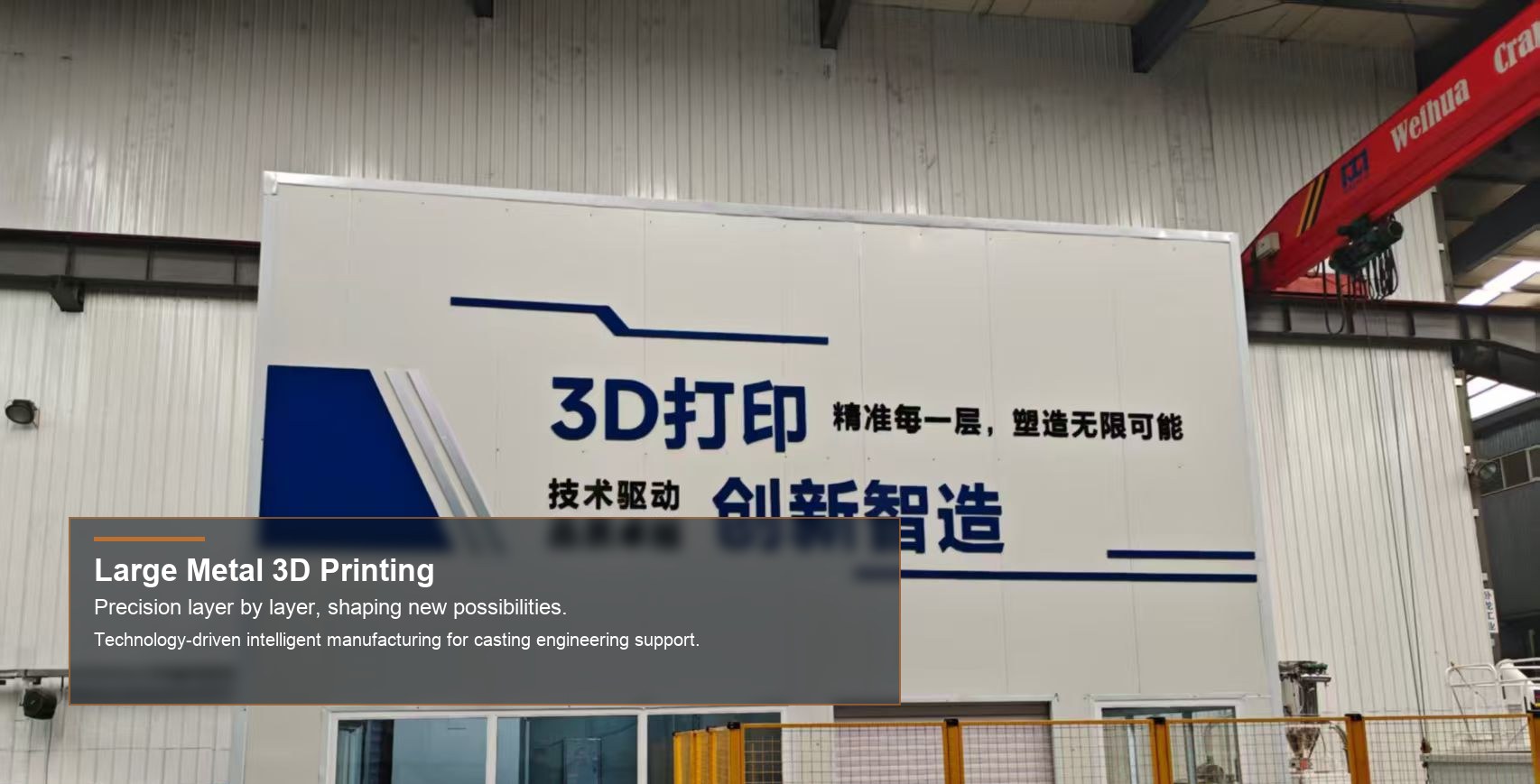
Immagine del progetto
Industrial metal 3D printing is valued for design freedom and complex geometry, while foundry-focused 3D printing is often used to support molds, cores, prototypes, and small-batch validation. For an OEM casting RFQ, the useful question is not whether 3D printing replaces casting, but where it can make early engineering review faster and clearer.
Basato su informazioni recenti del settore
Metal additive manufacturing and 3D printed foundry applications · EOS and voxeljet
Complex internal geometry can be discussed earlier when a 3D model is available
Prototype or pilot-batch needs can be reviewed before stable casting production is finalized
Additive review can help identify machining, distortion, inspection, and route-fit questions
The strongest value is in connecting additive manufacturing with casting route selection and CNC follow-up
Punti di valutazione
The best RFQ use is practical and limited: send the drawing, 3D model, sample photos, application notes, and quantity plan so the supplier can judge whether additive support is useful before quotation.
Use it for complex housings, internal passages, lightweight structures, or difficult-to-machine areas
Use it when a prototype, sample validation, or design iteration is needed before batch casting
Use it to clarify whether the final route should remain conventional casting, additive-supported review, or a hybrid discussion
Do not treat it as an instant quote promise; material, inspection, machining, and production route still need engineering review
In breve
Sintesi di applicazione, valutazione e dati necessari per la RFQ.
Focus acquisti
Indicazioni pratiche per esigenze reali di approvvigionamento
Avvio RFQ
Disegno, quantità, materiale e note di lavorazione
Gestione progetto
Revisione disegno, processo, controllo e consegna
Ideale per
Acquisti OEM, sourcing e valutazione tecnica
Focus RFQ
Prepara questi elementi per valutare insieme materiale, fusione, lavorazione e controllo.
Disegno 2D e file 3D se disponibile
Applicazione, condizioni di servizio e mercato di destinazione
Grado materiale o almeno orientamento del materiale
Quantità, fabbisogno annuo e ordine di prova
Lavorazioni, tolleranze critiche e requisiti di controllo
Buyer FAQ
These questions help buyers understand how additive manufacturing can fit into a practical OEM casting conversation.
Not usually. For Hongsen's positioning, casting remains the main manufacturing route. Metal 3D printing is a support capability for complex geometry discussion, prototype validation, and early engineering review.
Mention it when the part has a 3D model, complex internal structure, lightweight design goal, difficult machining areas, or prototype validation need.
A 2D drawing, 3D model, sample photos, material direction, quantity plan, machining notes, and inspection expectations are enough to begin a practical review.
Focus RFQ
Upload the drawing and 3D model so Hongsen can review casting route, additive support potential, machining scope, and inspection focus before quotation.